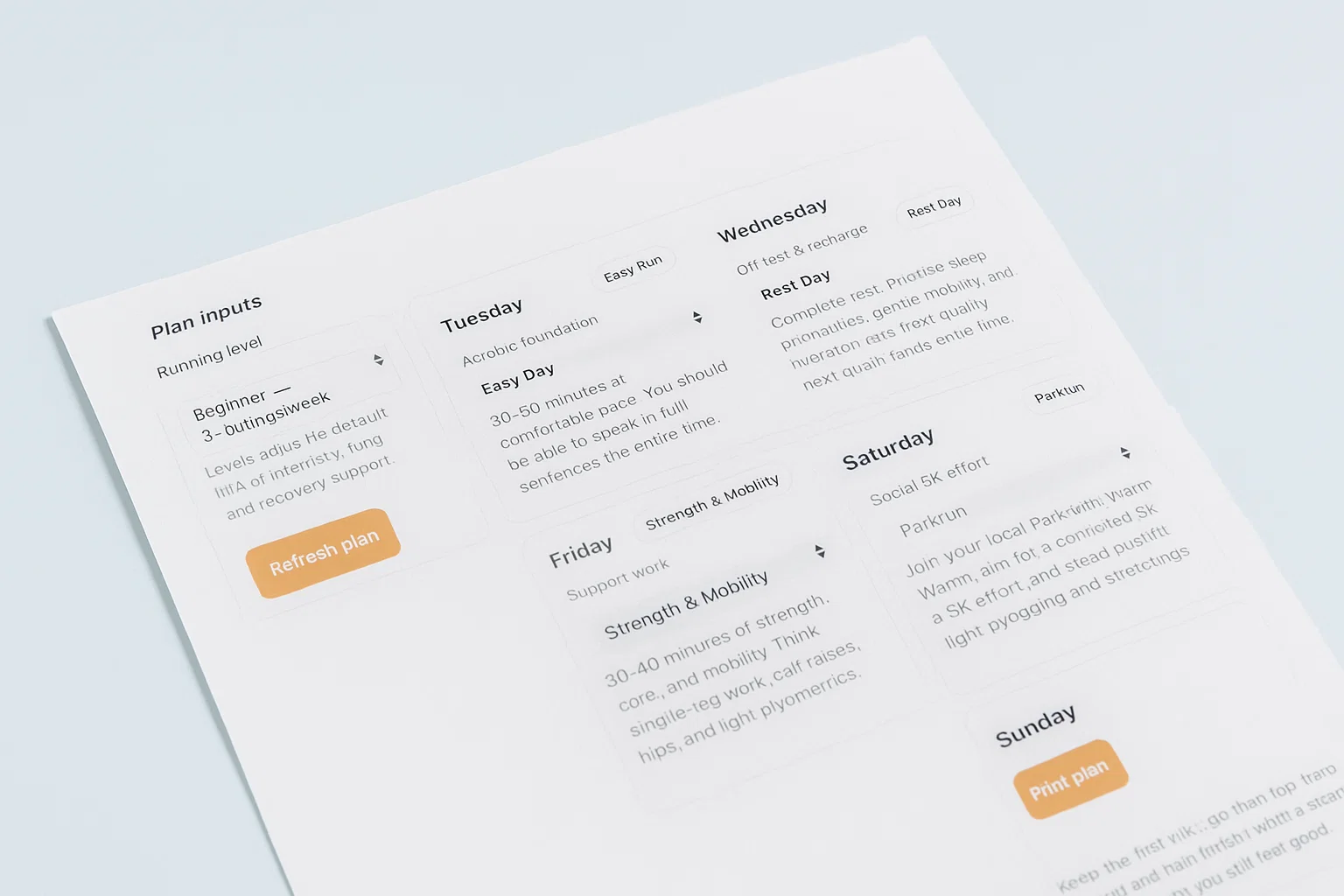
Build a weekly running plan that balances stress and recovery.
Choose your running level and we’ll suggest tempo runs, fartleks, heart-rate guided aerobic work, long runs, very easy recovery jogs, Saturday Parkrun options, and supportive work—then you can fine‑tune each day.
Plan inputs
Weekly schedule
Adjust any day using the dropdown. Descriptions update instantly so you can tailor the flow.
Plan overview
Aim to keep easy and recovery days very gentle so the faster work and long run feel strong. Add mobility or strength where noted to support the extra mileage.
How to build a sustainable weekly running plan
Start by anchoring your week around the sessions that matter most for your current goal. For many runners that means one long run, one quality workout, and several low-stress aerobic days. Keep easy days truly easy so harder sessions feel controlled instead of forced. This planner suggests a balanced structure, but your best schedule is the one you can repeat for months with minimal disruption.
Use progression in small increments. Add distance, intensity, or frequency gradually rather than changing all three in one week. A practical guideline is to increase training load in modest steps for two to three weeks, then schedule a lighter week to consolidate gains. Include strength and mobility work on lower-intensity days to support tissue resilience and running economy.
When life gets busy, protect consistency over perfection. Shorten a run instead of skipping the entire day, and move key sessions when sleep or stress suggests recovery should come first. If pain changes your stride, replace running with low-impact aerobic work and reassess before resuming intensity. Adaptation happens when stress and recovery stay in balance across the whole training cycle.