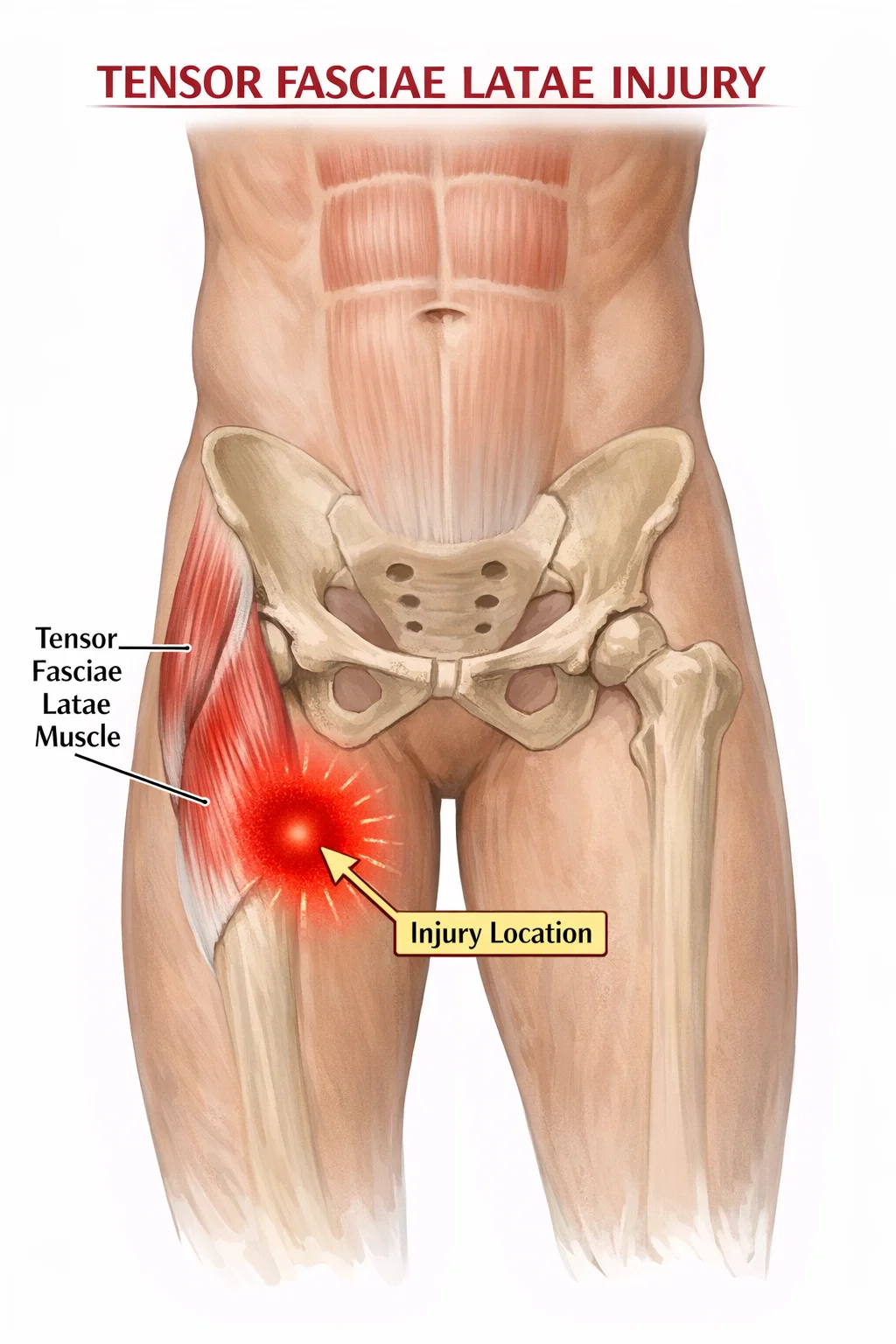
The tensor fasciae latae (TFL) is a small hip flexor and abductor that blends into the IT band. When it is overloaded, runners often feel sharp or achy pain at the outer front of the hip that flares with speed, hills, or prolonged sitting. Early recognition and smart loading keep a minor strain from becoming a stubborn setback.
01Signs & Symptoms
Common signals of a TFL injury include:
- Pinpoint pain on the outer front hip, just below the iliac crest.
- Discomfort when lifting the knee, running uphill, or accelerating.
- Tightness or burning that spreads along the outer thigh or IT band.
- Hip tenderness when pressing into the muscle belly.
- Stiffness after sitting that eases once you warm up.
To tell a TFL injury apart from more general hip injuries, focus on location and triggers.
- TFL strain: localized outer-front hip pain that spikes with hip flexion and abduction.
- General hip flexor strain: deeper groin or front-hip pain that worsens with straight-leg raises.
- Glute medius or hip joint issues: side-hip ache that flares with single-leg stance or lying on the affected side.
- Referral patterns: diffuse pain into the groin, low back, or thigh can hint at non-TFL sources.
02Why It Happens
- Sudden spikes in speed work, hill repeats, or total mileage.
- Weak glute medius or deep hip rotators causing the TFL to overwork.
- Long periods of sitting that keep the TFL shortened.
- Cadence or stride changes that increase hip flexor load.
- Limited hip extension or ankle mobility that shifts stress to the front hip.
03Treatment Basics
Settle pain first, then reload the muscle gradually:
- Relative rest: Reduce running volume and skip hard hills or speed until pain calms.
- Targeted soft tissue work: Use a lacrosse ball or gentle massage to ease guarding.
- Hip mobility: Add gentle hip flexor and glute stretches after warm activity.
- Isometric loading: Short hip abductor holds or side planks to reintroduce tension safely.
- Gradual strength: Progress to controlled single‑leg work once daily pain is minimal.
04Should You Run?
You can keep running only if pain stays mild and does not worsen after the run.
- Keep discomfort at or below a 2–3/10 during the run.
- Stop if pain changes your stride or lingers the next morning.
- Swap in cycling, pool running, or elliptical if the hip flares quickly.
- When symptoms settle, return with flat, easy runs and a short stride.
05Recovery Timeline
Recovery depends on severity and how quickly training is adjusted:
- Mild overload: 1–2 weeks of reduced running plus strength resets often resolves symptoms.
- Moderate strain: 3–6 weeks with progressive loading and running re‑introduction.
- Persistent pain: 6–10+ weeks may be needed if the hip keeps getting re‑aggravated.
Look for full strength, pain‑free walking, and no next‑day soreness before adding speed or hills.
06Prevention Exercises
Build a weekly routine that keeps the TFL from dominating hip work:
- Side‑lying hip abductions: Focus on the glute medius, toes slightly down.
- Monster walks: Light band tension, knees soft, pelvis level.
- Single‑leg Romanian deadlifts: Control hip hinge and avoid pelvic tilt.
- Split squats: Keep the front knee tracking over mid‑foot.
- Hip flexor mobility: 30–45 second holds after warm‑ups or runs.
- Stride checks: Maintain a quick cadence (170–180 steps/min) to reduce over‑striding.
If pain persists beyond a couple of weeks, seek assessment from a sports medicine professional.
Last updated: January 14, 2026
Disclaimer: This article is general information only and not medical advice. Seek professional care for persistent pain.