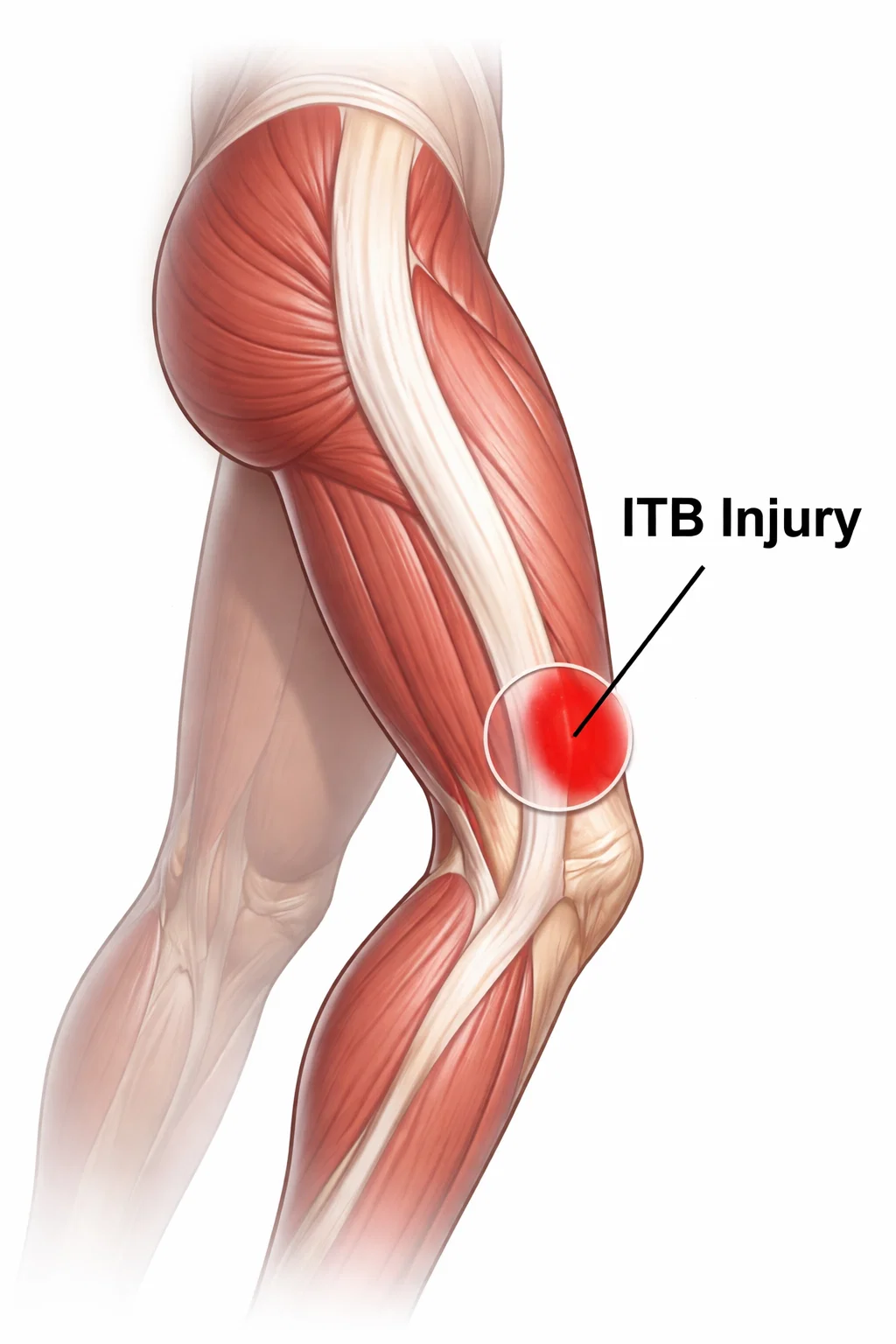
IT band syndrome (ITBS) is the leading cause of lateral knee pain in runners. The irritation happens where the band rubs over the bony outer knee (lateral femoral epicondyle), and the upstream fix is usually better hip stability rather than more work on the knee itself.
01Symptoms & Diagnosis
ITBS presents with:
- Sharp or burning pain on the outside of the knee, often after a few miles.
- Tenderness when pressing just above the knee joint.
- Discomfort that worsens running downhill or after sitting long periods.
- Pain that eases with rest but returns quickly when running resumes.
02Common Causes
- Rapid increases in mileage or downhill running.
- IT band friction over the bony outer knee when the leg repeatedly flexes and extends.
- Weak hip abductors allowing the knee to collapse inward.
- Excessive foot pronation or worn-out shoes.
- Running on banked surfaces or always on the same side of the road.
03Immediate Care
Address symptoms early:
- Rest: Reduce or stop running to calm irritation.
- Ice: 10–15 minutes after activity to manage inflammation.
- Mobility: Gentle hip and glute stretches for relief (the IT band itself does not stretch).
- Anti‑inflammatories: As advised by a medical professional.
04Rehab & Strength
Build resilience with progressive loading, especially at the hip where the glute med and deep rotators keep the thigh from drifting inward:
- Side‑lying leg raises and clamshells to strengthen the hip abductors.
- Single‑leg squats and step‑downs focusing on knee alignment.
- Foam rolling along the outer thigh for temporary symptom relief; it can ease discomfort in the tissues around the band but does not lengthen the IT band itself.
- Short bouts of easy running, increasing distance only when pain‑free.
05The Stretching Myth
It is a common misconception that stretching the IT band will fix ITBS. The IT band is a thick, fibrous structure that does not appreciably lengthen, so aggressive stretching or rolling cannot "loosen" it in a way that solves the underlying issue.
Foam rolling can be useful for short‑term symptom relief because it reduces sensitivity in the surrounding tissues, but it does not stretch the IT band itself. Pair any rolling with hip and glute strengthening, along with gradual training adjustments, to address the true drivers of irritation.
06Prevention & Return
- Increase training volume gradually and vary running surfaces.
- Keep hips and glutes strong with regular strength sessions.
- Rotate shoes and replace worn pairs promptly.
- Resume running with walk‑run intervals; stop if pain persists.
If symptoms persist or worsen, consult a medical professional.
Last updated: February 3, 2026
Disclaimer: This article is general information only and not medical advice. Seek professional care for persistent pain.