A good running watch is not just a stopwatch with GPS. It should help you pace accurately, understand effort, follow workouts, recover better, stay safer, and make cleaner training decisions without forcing you to decode a dashboard after every run.
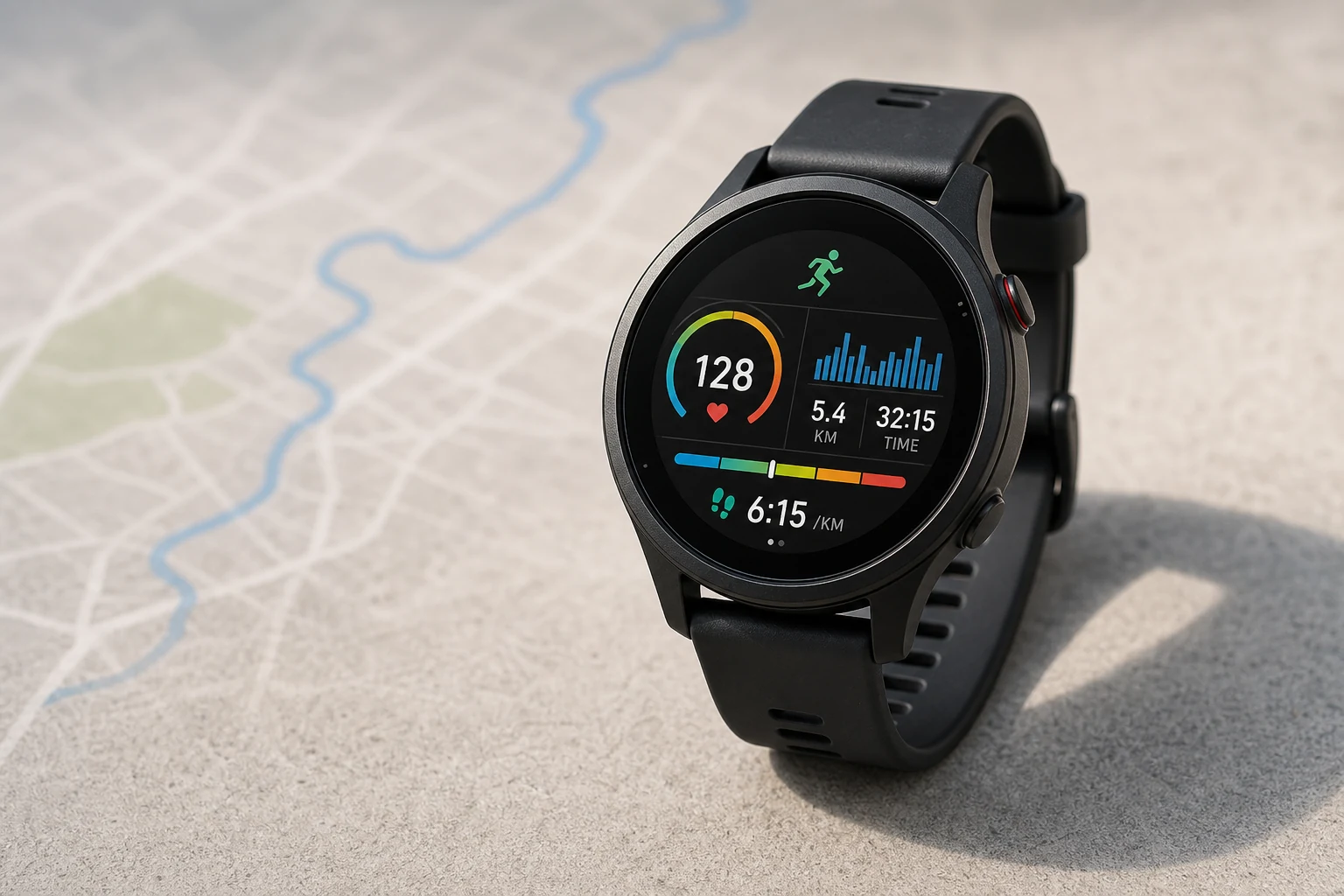
What a running watch should actually do
The best running watch for you is the one that turns messy run data into useful decisions. A beginner may need reliable distance, pace, and heart-rate zones. A marathon runner may care more about workouts, race pacing, battery life, and recovery trends. A trail runner may need navigation, elevation, weather awareness, and controls that work in rain or with gloves.
Do not judge a watch by the longest feature list. Judge it by whether its features answer practical questions:
- How far and how fast am I running? GPS, lap pace, split alerts, and indoor calibration.
- How hard is this effort? wrist heart rate, heart-rate zones, cadence, power, and perceived effort notes.
- Am I training too much or too little? training load, recovery, sleep, HRV, and trend-based readiness.
- Can I execute the session? structured workouts, pace alerts, intervals, route guidance, and race-day screens.
- Will it work for my runs? battery modes, water resistance, comfort, buttons, display visibility, and app exports.
GPS, GNSS, pace, and distance accuracy
GPS is the feature most runners notice first. Modern watches often use multiple satellite systems, sometimes described as GNSS support, and higher-end models may offer dual-frequency or multi-band modes. The practical benefit is better tracking around tall buildings, dense trees, cliffs, or winding routes. The tradeoff is battery use: the most accurate satellite mode usually drains the watch faster.
For road running, accurate lap pace often matters more than perfect instant pace. Instant pace can jump around because satellite data is noisy from second to second. Lap pace, average pace, and split alerts give a steadier picture for workouts and races.
- Look for: reliable auto laps, manual lap button, configurable run screens, GPS-only and high-accuracy modes.
- Useful upgrade: multi-band GPS if you run in cities, forests, mountains, or races where route precision matters.
- Do not overpay for: extreme map/navigation features if you mostly run familiar roads and tracks.
Heart rate, HRV, sleep, cadence, power, and VO2 max
Wrist heart rate is convenient and good enough for many easy runs, trends, and zone checks. It can be less reliable during very hard intervals, cold weather, loose strap fit, or rapid changes in effort. If heart-rate precision matters for workouts, a compatible chest strap or arm strap is still the stronger setup.
HRV, sleep, recovery, and readiness features are trend tools. They should help you notice when stress, poor sleep, travel, heat, illness, or heavy training are stacking up. Treat them as context, not commands. If a watch says you are tired but you feel strong, use judgment. If it says you are ready but your legs and breathing disagree, trust the body.
Other metrics can be helpful when used sparingly:
- Cadence: useful for spotting overstriding patterns or monitoring form changes. Pair it with the running cadence guide.
- Running power: useful on hills and windy days if the watch ecosystem supports it consistently.
- VO2 max estimates: useful as a trend, not a lab result. Compare with the VO2 Max Calculator for broader context.
- Heart-rate zones: useful for easy-run discipline, especially with the Heart Rate Zones Calculator.
Workouts, alerts, training load, and race support
Structured workouts are one of the most useful running watch features. A good watch should let you load intervals, tempos, long-run blocks, warmups, cooldowns, and pace or heart-rate targets. During the run, it should show only the fields you need: current lap, target range, remaining time or distance, and a clear alert when you drift too far.
Training load and readiness features are useful when they show trends across weeks. They can help you notice when your easy days are too hard, when workouts are clustering too close together, or when a taper is actually reducing strain. These features pair well with the Zone 2 guide and the long-run guide.
- Must-have for training plans: custom workouts, interval repeats, pace or HR alerts, and manual laps.
- Useful for racing: race predictor trends, estimated finish time, split alerts, course distance correction, and lap pace.
- Useful for consistency: weekly volume, intensity distribution, recovery prompts, and simple calendar integration.
Navigation, elevation, and safety features
Navigation matters more as your runs get longer, more remote, or less familiar. Basic breadcrumb navigation may be enough for local routes. Full maps, turn alerts, route importing, and climb/elevation screens become more useful for trail running, travel, ultras, and long marathon training routes.
Safety features vary by watch and phone connection. Useful options include live tracking, incident detection, emergency contact alerts, return-to-start, storm or weather prompts, and a screen bright enough to read in poor light. These should not replace judgment, route planning, or carrying a phone where needed, but they can reduce risk.
Battery, comfort, durability, screen, and app ecosystem
A running watch fails if it cannot comfortably survive your normal week. Battery claims can be confusing because smartwatch mode, standard GPS, multi-band GPS, music playback, navigation, and always-on displays use very different amounts of power. Check battery life in the GPS mode you will actually use.
Comfort and controls matter more than they seem. A bulky watch that annoys you on easy runs will not collect useful trends. Buttons are still valuable because sweat, rain, gloves, and cold fingers can make touchscreens awkward. Screen readability matters for quick glances at pace and lap data.
The app ecosystem is also part of the watch. Look for clean history, export support, route planning, workout sync, and compatibility with your training platforms. A watch that locks away your data or makes workout setup painful will feel worse over time, even if the hardware is strong.
Which features matter most by runner type?
The right feature set depends on your running, not on the most expensive model. Use this matrix as a practical buying filter.
Final checklist before choosing a running watch
- Can you read pace, lap pace, heart rate, and distance at a glance?
- Does the GPS mode you need have enough battery for your longest normal run?
- Can you create or sync the workouts you actually do?
- Does the watch support your preferred app, training log, or export format?
- Are the recovery and readiness metrics presented as trends rather than confusing one-off scores?
- Is the watch comfortable enough to wear for sleep and daily recovery tracking?
- For trails or travel, can it guide you back when the route gets messy?
A good running watch should make training simpler. If it gives you more alerts but fewer decisions, simplify the screens, use fewer metrics, and focus on the numbers that guide your next run.
Related tools and guides
- Heart Rate Zones Calculator
- VO2 Max Calculator
- Good Running Cadence: Beginner Ranges & How to Increase
- Zone 2 Running Pace Guide
- How Long Should My Long Run Be?
- What Pace Do I Need for a 4 Hour Marathon?
Feature references
- Garmin running watch feature comparison
- COROS GPS mode guidance
- Polar smart coaching and watch feature manual
Last updated: June 4, 2026