Calf strains are common in runners and range from minor tightness to complete muscle tears. Knowing the grade of injury and responding early can speed recovery.
01Types & Grades
The calf is made up primarily of the gastrocnemius and soleus muscles. Runners can develop several injury patterns depending on pace, terrain, and training load. Strains are classified:
- Grade I: Mild pull with minimal fiber damage and little loss of strength.
- Grade II: Partial tear causing sharp pain, swelling, and reduced function.
- Grade III: Complete rupture with severe pain and inability to push off.
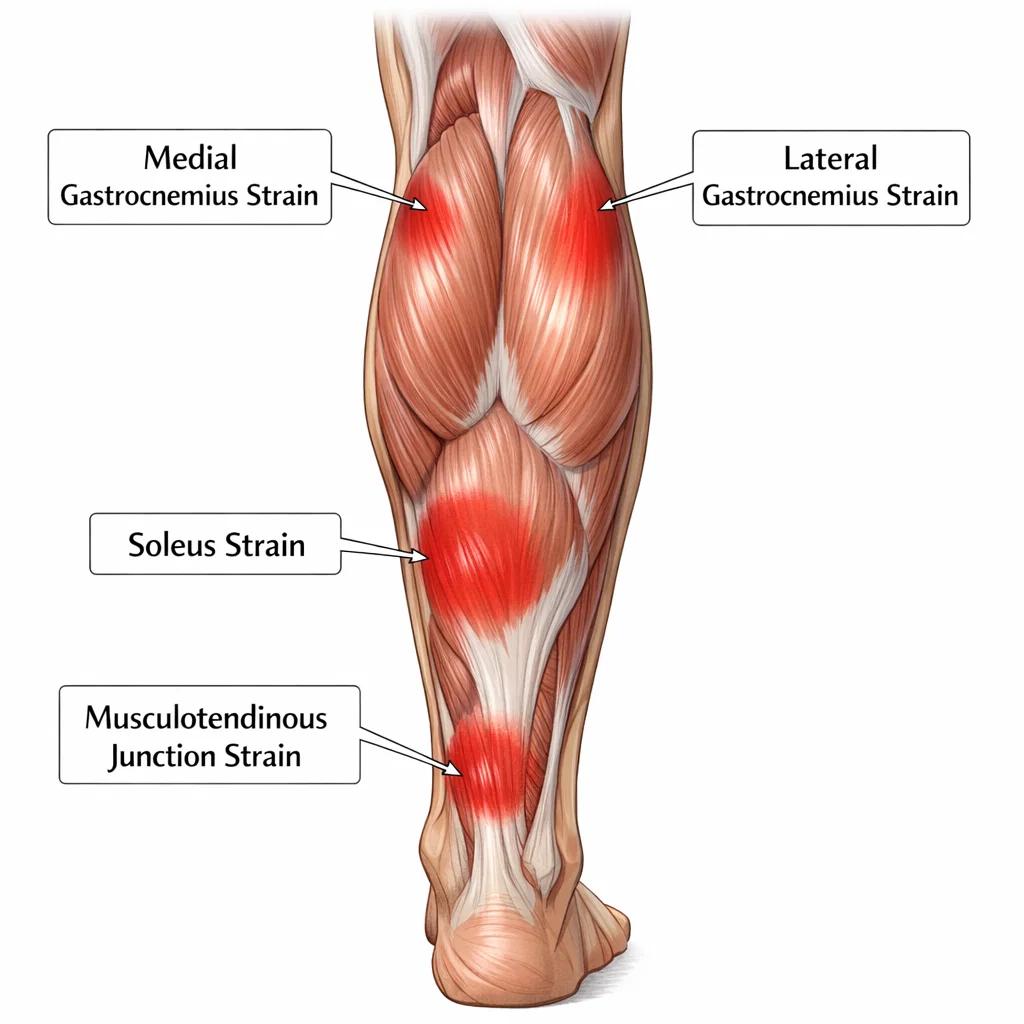
Common runner-specific variations include:
- Medial gastrocnemius strain ("tennis leg"): Often felt high in the inner calf after a sudden acceleration, sprint finish, or explosive hill surge.
- Lateral gastrocnemius strain: Less common, but can appear with uneven footing or sharp directional changes on trails and corners.
- Soleus strain: Usually deeper, lower-calf pain that builds during steady runs, tempo work, or long descents; often aggravated by bent-knee loading.
- Musculotendinous junction strain: Injury at the transition between muscle and tendon, typically causing focal tenderness and stiffness when pushing off.
- Recurrent overload strain: Repeated "niggles" from returning too quickly after a prior calf issue, often linked to unresolved strength deficits or sudden mileage spikes.
Other lower-leg issues can mimic a calf strain. Warning signs that suggest a different diagnosis include nerve-like tingling (possible lumbar or peripheral nerve irritation), pain tracking into the Achilles tendon, or persistent one-sided swelling that does not settle with rest.
02Common Causes
- Sudden increase in hill work or speed training.
- Poor warm‑up or running in cold conditions.
- Weakness or tightness in calf or hamstring muscles.
- Fatigue and poor running mechanics.
03Immediate Care
For the first 24-48 hours, protect the calf and use symptom-guided care rather than relying on repeated icing as a default. Current soft-tissue guidance has moved toward PEACE & LOVE principles: protect the area, avoid activities that sharply increase pain, use compression and elevation for significant swelling, and then rebuild load gradually as pain allows. Ice can still be used briefly for comfort or swelling, but it should be wrapped, limited to about 15 minutes, and avoided if you have circulation or sensation problems.
- Protect: Stop running and unload the calf for 1-3 days if walking is painful.
- Comfort: Use short, wrapped ice applications only if swelling or pain needs settling.
- Compression: A light wrap or sleeve can help control swelling and support comfort.
- Elevation: Prop the leg above heart level when swelling is noticeable.
04Rehab & Strength
After acute pain settles, gradually load the calf:
- Gentle calf raises, progressing from double‑ to single‑leg.
- Seated calf raises to target the soleus.
- Light jogging or cycling to restore blood flow.
- Balance and hopping drills when pain‑free.
05Prevention & Return
- Increase mileage and speed gradually; avoid sudden spikes.
- Warm up with dynamic movements and easy running.
- Maintain calf and hamstring strength twice per week.
- Return to running with short run‑walk intervals, stopping if pain returns.
If symptoms persist or worsen, consult a medical professional.
Sources and review
Last editorial source check: June 19, 2026. Date last medically reviewed: Not yet independently medically reviewed.
- Immediate-care advice is checked against Dubois and Esculier's BJSM PEACE & LOVE editorial and NHS inform soft-tissue injury advice.
- Rehab, return-to-running, and referral guidance is informed by sports-medicine consensus and review literature from sources such as the British Journal of Sports Medicine and PubMed-indexed papers.
- Seek urgent care for severe pain, inability to weight bear, rapidly increasing swelling, hot/red skin, numbness, or symptoms suggesting a blood clot or Achilles rupture.
Last updated: June 19, 2026
Disclaimer: This article is general information only and not medical advice. Seek professional care for persistent pain.
Learn how RunCalcs reviews health, injury, recovery, and nutrition content in our medical review policy.